Your Pelvic Floor Through Menopause: Why Symptoms Change and What Training Still Fixes
Menopause changes the pelvic floor’s operating conditions — the estrogen that supported those tissues declines, and symptoms that never existed appear or old ones return — and the training still works, with adaptations. The menopause floor guide: the why, the protocol and the full toolkit.

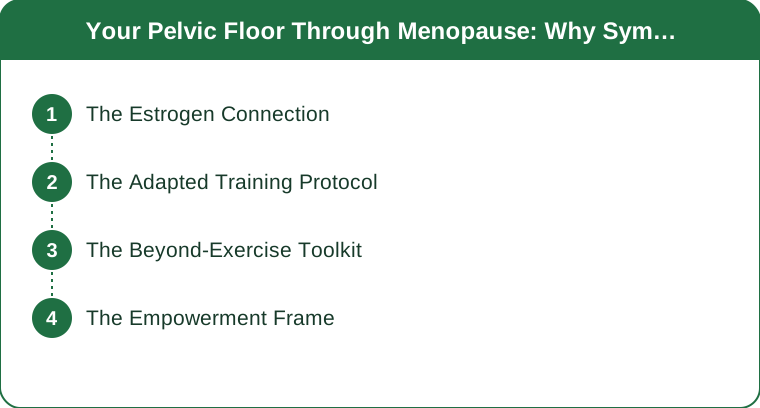
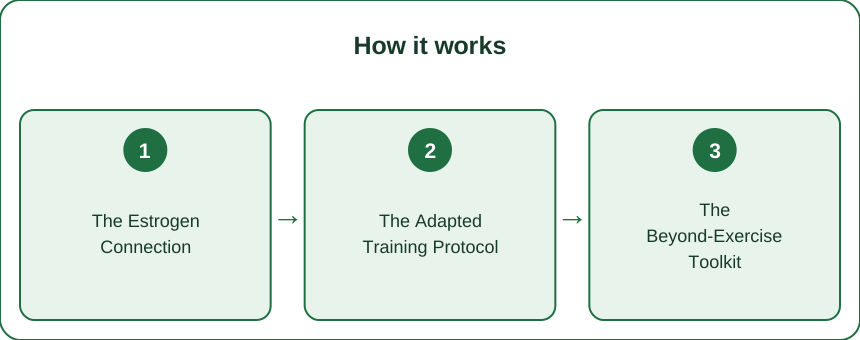
The Estrogen Connection
Why things change: the tissue biology (the pelvic tissues being estrogen-responsive — the declining levels thinning and drying the urethral and vaginal tissues; the support structures losing some spring), the symptom translations (the new-or-returning leaks, the urgency-and-frequency shifts, the heaviness sensations — the genitourinary syndrome of menopause naming what was long dismissed; the dryness-and-discomfort tier from the menopause doctrine), the muscle-aging overlay (the sarcopenia from the muscle doctrine not sparing the floor — the strength decline that training directly answers), the common-not-inevitable framing (the symptoms being highly treatable — the resignation script (‘just aging’) retired per the treatable doctrine; the majority improving with proper care), and the whole-person context (the sleep, mood and hot-flash chapters interacting — the nighttime bathroom trips fragmenting the sleep the hormones already disturb; the floor care as sleep care).
The Adapted Training Protocol
The floor program after 50: the assessment-first standard (the pelvic-physio evaluation being MORE valuable now — the weak-versus-tight sorting from the basics doctrine; the prolapse-grading that shapes the program), the progressive-kegel core (the correct-technique training from the basics doctrine with the aging-muscle adjustments — the louder-stimulus principle from the masters doctrine: the holds grown to 10 seconds, the daily consistency mattering more; the 12-week timelines honest for older tissue), the functional integration (‘the knack’ pre-tension before lifts, sneezes and the garden — the reflex retrained; the strength-training pairing from the muscle doctrine: the squats and carries that load the floor productively), the release-work inclusion (the tight-floor presentations common in this decade too — the down-training and breath work per the basics doctrine; the pain-and-urgency patterns needing release, not more squeezing), the impact-decision craft (the running-and-jumping continued with floor support — the return-ladder from the leakproof doctrine; the impact being bone-medicine per the bone doctrine, worth defending with floor training), and the consistency systems (the habit-anchor placement from the habit doctrine — the daily set attached to the morning routine).

The Beyond-Exercise Toolkit
The full treatment menu: the local-estrogen conversation (the low-dose vaginal estrogen having strong evidence for genitourinary symptoms — the local-versus-systemic distinction that eases many worries; the doctor conversation worth having per the medical doctrine), the pessary option (the support device for prolapse symptoms — the underused, low-tech tool; the fitting by professionals), the lifestyle supports (the constipation management from the fiber doctrine — the straining being the floor’s enemy; the weight-and-cough factors addressed kindly; the bladder-training protocols for urgency: the scheduled voids and urge-surfing techniques), the moisturizer-and-lubricant tier (the non-hormonal comfort options from the menopause doctrine), the surgical honesty (the procedures existing for the conservative-care-insufficient cases — the physio-first sequence; the informed-options conversation), and the professional map (the pelvic physio, the menopause-literate GP, the urogynecologist tier — the referral ladder; the persistence rewarded: the second opinion when dismissed per the advocacy doctrine).
The Empowerment Frame
The decade’s real story: the treatability headline (the floor symptoms in menopause responding to training-plus-treatment at high rates — the trials in older women showing improvement at every age; the never-too-late doctrine with pelvic receipts), the quality-of-life stakes (the exercise, travel, intimacy and laughter that symptoms quietly tax — the life reclaimed being the point per the leakproof doctrine), the taboo-breaking note (the symptoms spoken being symptoms treated — the friend conversations and doctor visits that the silence prevents; the community doctrine applied to the least-discussed muscle group), the daily-investment math (the ten minutes daily against the decades of function — the compound interest from the longevity doctrine), and the closing reframe (menopause as the floor’s second training era, not its retirement — the muscle that responds at every age, given attention exactly when conditions changed; the symptoms explained, the tools assembled, the resignation declined). Assess first, train louder and longer, ask about local estrogen: the floor, defended through the change.
Menopause thins estrogen-responsive floor tissues — symptoms are common, not inevitable, and highly treatable. Train with longer holds and daily consistency, learn ‘the knack’, ask about low-dose local estrogen, and see a pelvic physio rather than accepting the ‘just aging’ script.
Keep Reading
This article is for general informational purposes only and is not medical advice. Always consult a qualified health professional for guidance specific to you.