Pelvic Floor Tension and Pelvic Floor Weakness Need Completely Different Fixes
Quick Answer: A pelvic floor that’s too tense causes many of the same symptoms as a weak one — leaking, pain, urgency — so doing more Kegels on an already-tight pelvic floor can actually worsen symptoms instead of fixing them.
If you’ve been diligently doing Kegels for months with no improvement, or symptoms have gotten worse, tension rather than weakness might be the actual problem.

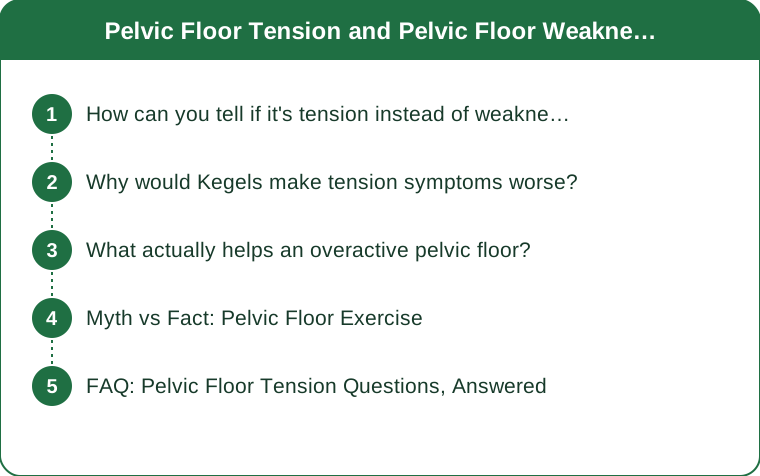
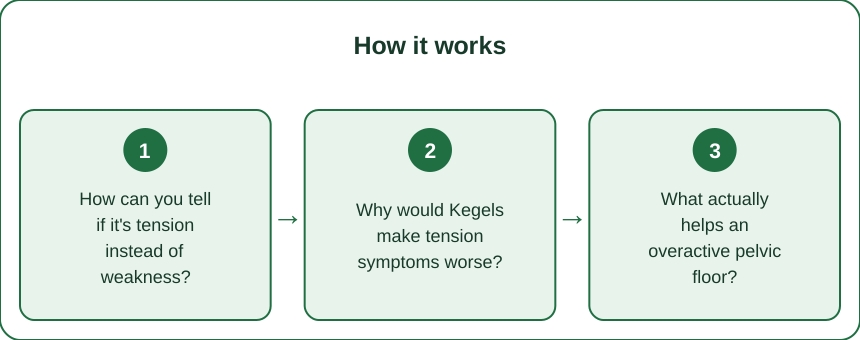
How can you tell if it’s tension instead of weakness?
Signs pointing toward an overactive, tense pelvic floor include pain during intercourse, difficulty starting urination, a sensation of pelvic pressure or fullness, and lower back or hip tightness that doesn’t resolve with stretching elsewhere. Weakness tends to show up as leaking during coughing, jumping, or laughing, while tension symptoms often include pain or a sense the muscles won’t fully relax.
Why would Kegels make tension symptoms worse?
A Kegel is a contraction — squeezing the pelvic floor muscles. If those muscles are already chronically tight, adding more contraction on top of existing tension is like doing bicep curls on an already-clenched fist. The muscle doesn’t get the chance to release, and the constant contraction cue can deepen the guarding pattern rather than resolve it.

What actually helps an overactive pelvic floor?
Diaphragmatic breathing is usually the starting point — inhaling in a way that lets the belly and pelvic floor expand and soften, rather than staying braced. Gentle stretches like deep squat holds, child’s pose, and happy baby pose can also help release tension. Many people benefit from working with a pelvic floor physical therapist who can assess internally whether tension is truly the pattern before building a release-focused routine.
Myth vs Fact: Pelvic Floor Exercise
Myth: Kegels are the universal fix for pelvic floor problems. Fact: Kegels help weakness, but can worsen tension-related symptoms — the right exercise depends on which pattern you actually have.
Myth: Only postpartum women have pelvic floor tension. Fact: Chronic stress, high-impact training without recovery, and even prolonged sitting can contribute to pelvic floor tension in anyone.
Myth: You can self-diagnose tension versus weakness from symptoms alone. Fact: Symptoms overlap significantly — a pelvic floor physical therapist’s internal assessment is the most reliable way to know which pattern you have.
FAQ: Pelvic Floor Tension Questions, Answered
Can you have both tension and weakness at the same time?
Yes, and it’s actually common — some pelvic floor muscles can be tight while others in the same region are weak, which is part of why self-treating with Kegels alone often falls short.
How long does pelvic floor tension take to improve?
With consistent breathing work and stretching, many people notice some easing within 4-6 weeks, though full resolution with physical therapy often takes a few months.
Is pelvic floor physical therapy covered by insurance?
Coverage varies by plan and region — it’s worth calling your provider directly, as many pelvic floor PT practices can help verify benefits before your first visit.
TL;DR:
- Pelvic floor tension and weakness can cause similar symptoms but need opposite treatment approaches
- More Kegels on a tense pelvic floor can worsen symptoms rather than help
- Diaphragmatic breathing and gentle stretching are starting points for tension
- A pelvic floor physical therapist’s assessment is the most reliable way to know which pattern applies to you
This is general information, not medical advice — a proper pelvic floor assessment is worth pursuing if symptoms haven’t improved with standard exercises.
Keep Reading
This article is for general informational purposes only and is not medical advice. Always consult a qualified health professional for guidance specific to you.