Why Pelvic Floor Tightness and Weakness Need Completely Different Fixes
Quick Answer: A pelvic floor can be symptomatic from being too weak or from being too tight and unable to relax, and because both can cause leaking or discomfort, doing kegels for a tension-based issue often makes symptoms worse rather than better — the fix depends entirely on which one is actually happening.
If kegels haven’t helped or have made things feel worse, tension rather than weakness may be the more likely explanation.

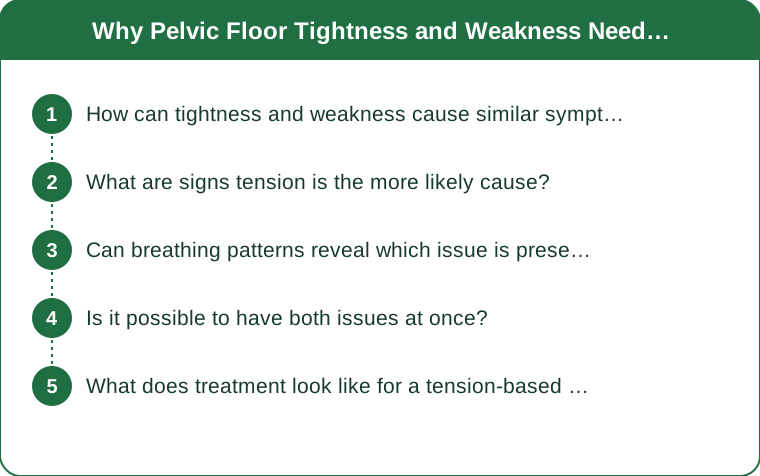
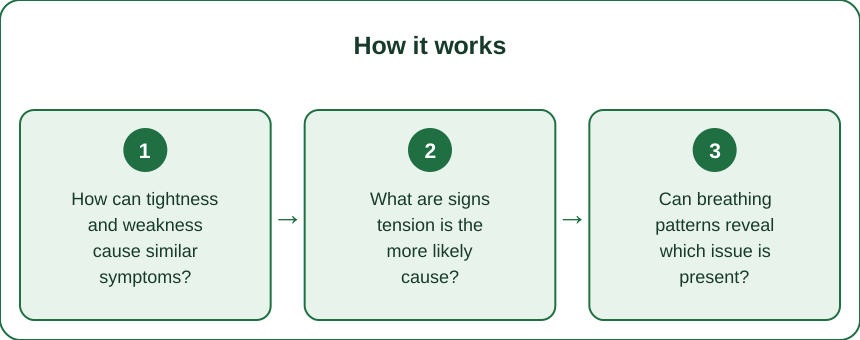
How can tightness and weakness cause similar symptoms?
A pelvic floor that’s chronically tense often can’t generate additional force on demand the way a healthy, flexible muscle can, so it may still leak under sudden pressure like a cough or jump — mimicking classic weakness symptoms even though the underlying issue is an inability to relax and reset between contractions, not insufficient strength.
What are signs tension is the more likely cause?
Pain during intercourse, difficulty starting urination, or a sensation of pelvic pressure or tightness rather than looseness are more commonly associated with an overly tense pelvic floor than a weak one. These symptoms are a signal to stop doing kegels and see a pelvic floor physical therapist, not to do more of them.

Can breathing patterns reveal which issue is present?
Often yes — a pelvic floor that doesn’t visibly or palpably relax on the exhale during diaphragmatic breathing tends to indicate a tension pattern, while one that lacks any noticeable engagement on a gentle contraction cue more often points toward weakness, though a professional assessment is the reliable way to confirm either.
Is it possible to have both issues at once?
Yes, and this combination is common enough that self-diagnosis is genuinely difficult — a pelvic floor can be both overly tense in a resting state and unable to generate adequate strength when needed, which is part of why a pelvic floor physical therapist’s hands-on assessment is generally more reliable than guessing from symptoms alone.
What does treatment look like for a tension-based issue?
Typically relaxation-focused work — diaphragmatic breathing, gentle stretching, and sometimes manual therapy — rather than active strengthening, since adding more contraction work to a muscle that’s already stuck in a partially contracted state tends to reinforce the problem rather than resolve it.
TL;DR:
- Tightness and weakness can cause overlapping symptoms like leaking
- Pain or difficulty relaxing points toward tension, not weakness
- Kegels can worsen a tension-based issue
- Both problems can coexist in the same person
This is general information, not medical advice — a pelvic floor physical therapist’s assessment is the reliable way to know which applies to you.
Keep Reading
This article is for general informational purposes only and is not medical advice. Always consult a qualified health professional for guidance specific to you.