Why Core Workouts Can Actually Weaken the Pelvic Floor
Core strength and pelvic floor strength are often assumed to move together automatically, but certain very common core exercises can actually increase downward pressure on the pelvic floor instead of supporting it.

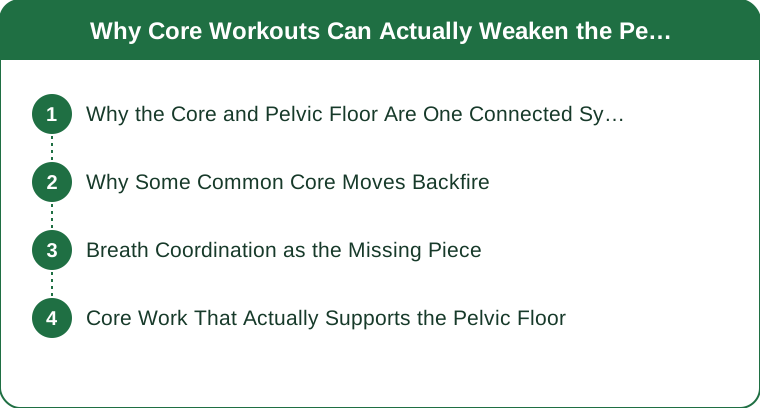
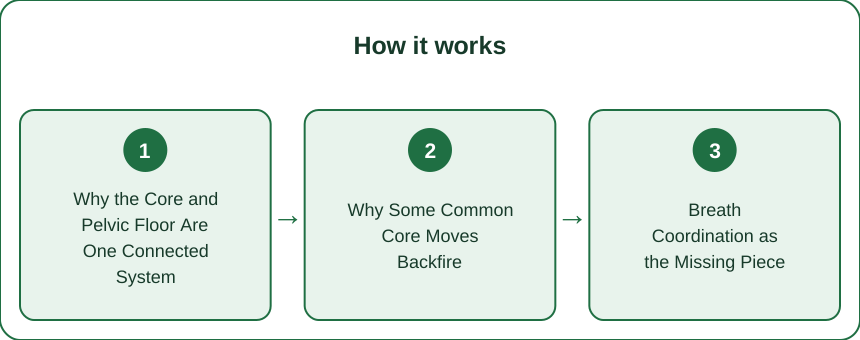
Why the Core and Pelvic Floor Are One Connected System
The anatomy: the pelvic floor functioning as the bottom of a pressure system that includes the diaphragm and deep core muscles, meaning core exercises change pressure throughout that entire system, not just the abdominal muscles being visibly worked.
Why Some Common Core Moves Backfire
The specific problem: exercises like standard crunches or heavy straining ab work increasing intra-abdominal pressure sharply in a downward direction, which can push against a pelvic floor that isn’t coordinating properly with that pressure increase.

Breath Coordination as the Missing Piece
The fix: exhaling during the exertion phase of a core exercise, which helps manage and redirect intra-abdominal pressure appropriately, versus holding the breath through exertion, which tends to drive pressure straight downward onto the pelvic floor.
Core Work That Actually Supports the Pelvic Floor
The better alternatives: controlled, breath-coordinated exercises like dead bugs and bird dogs building deep core stability without the sharp pressure spikes that crunches or heavy straining moves create, and the frame (core and pelvic floor strength aren’t automatically linked — exercises that spike downward intra-abdominal pressure without breath coordination can work against the pelvic floor, while controlled, breath-coordinated core work supports it.)
Core strength and pelvic floor strength are often assumed to build together automatically, but certain very common core exercises can actually work against the pelvic floor rather than supporting it, since the pelvic floor functions as the bottom of a connected pressure system that includes the diaphragm and deep core muscles. Exercises like standard crunches or heavy straining ab work increase intra-abdominal pressure sharply in a downward direction, which can push against a pelvic floor that isn’t coordinating properly with that pressure spike, and holding the breath through exertion tends to drive that pressure straight down rather than managing it. Exhaling during the exertion phase of a core exercise helps redirect that pressure more appropriately, and controlled, breath-coordinated moves like dead bugs and bird dogs build genuine deep core stability without the sharp pressure spikes that crunches or heavy straining moves create.
Keep Reading
This article is for general informational purposes only and is not medical advice. Always consult a qualified health professional for guidance specific to you.