Why Cough Season Is Harder on Your Pelvic Floor Than Running Ever Is
Quick Answer: A cough produces a rapid, high-magnitude spike in intra-abdominal pressure that the pelvic floor has very little time to prepare for. Running generates repeated moderate loads that the system can anticipate and time; coughing generates unpredictable large ones. Two weeks of a chest infection can deliver several thousand of them. The technique that helps most is the knack - a deliberate pelvic floor contraction just before each cough - combined with crossing your legs or sitting to cough, and treating the cough itself rather than enduring it.
You have been careful about running, careful about lifting, careful about jumping.
Then you get a chest infection and lose more ground in ten days than three months of training cost you.

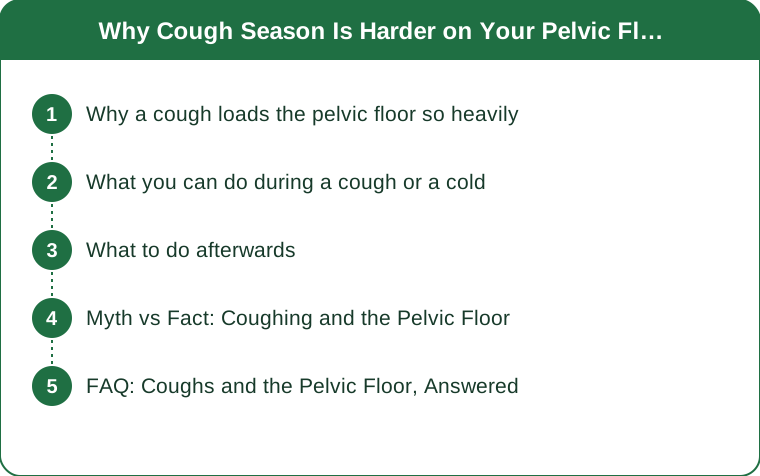
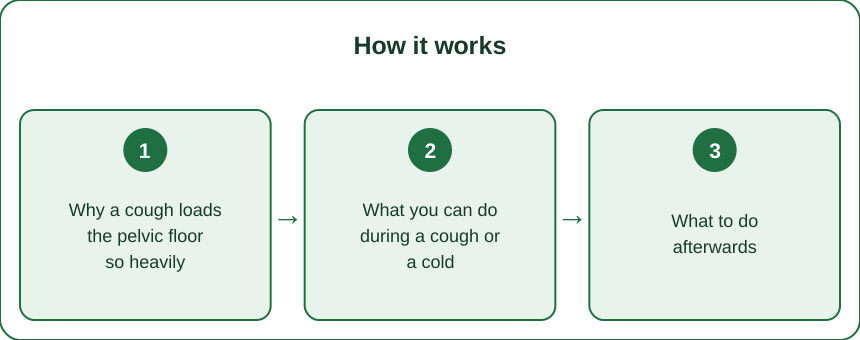
Why a cough loads the pelvic floor so heavily
A cough is a fast, forceful expiratory manoeuvre against a briefly closed airway, which produces a sharp rise in intra-abdominal pressure transmitted directly downward onto the pelvic floor.
The magnitude is high and the onset is fast. The pelvic floor normally pre-contracts before predictable loads; a spontaneous cough leaves very little time for that anticipatory contraction to develop.
Running, by contrast, is repetitive and predictable. The loads are more moderate, they arrive on a rhythm, and the system learns to time its response. Volume rather than peak pressure is the challenge there.
Volume during illness is what makes it serious. A moderate chest infection might produce several hundred coughs a day for one to two weeks - a load profile no training programme would ever prescribe.
And illness reduces your capacity at the same time. Fatigue, poor sleep, reduced activity and general deconditioning all lower pelvic floor endurance during exactly the period when demand is at its highest.
Which is why symptoms that had been well controlled reappear during a cold and why people wrongly conclude their pelvic floor work had failed.
What you can do during a cough or a cold
Learn the knack: contract the pelvic floor deliberately just before you cough. It is a well-established technique for reducing leakage with coughing and sneezing, and with practice it becomes largely automatic.
Practise it on a voluntary cough while you are well, because the aim is for it to be available when a spontaneous one arrives. Ten deliberate practice repetitions a day for a week is usually enough to establish it.
Cross your legs or sit down for a coughing fit, which increases support and reduces the downward load reaching the pelvic floor.
Lean slightly forward rather than throwing your head back. Forward flexion reduces the pressure transmitted downward compared with an upright or extended posture.
Treat the cough rather than tolerating it. Cough suppressants where appropriate, honey and warm fluids, steam, and treating the underlying infection. Reducing the number of coughs is the single most effective thing available, and it is often the thing people neglect entirely.
Support your perineum with a hand or folded towel during a severe fit if leakage is significant. It sounds improvised and it works.

What to do afterwards
Expect a temporary setback and treat it as temporary. Most people return to their previous baseline within a few weeks after the coughing stops, provided they resume their pelvic floor work.
Restart pelvic floor exercises at a reduced level rather than at your previous one. The tissue has just been through an unusual load, and returning at full volume is how a temporary setback becomes a longer one.
Do not stop drinking to manage leakage. Concentrated urine irritates the bladder and worsens urgency, making the whole picture worse for a short-term reduction in volume.
Avoid the just-in-case toilet habit during and after illness. Frequent precautionary emptying trains the bladder to signal at lower volumes, and that habit outlasts the cold by months.
Return to running gradually once the cough has settled, not while it is still present. Combining a cough with running load is the fastest route to a longer setback.
And seek assessment if symptoms have not returned to baseline after about four to six weeks, or at any point if there is pain, a sensation of heaviness or bulging, or leakage that is significantly affecting your life. Pelvic health physiotherapy is effective and under-used. This is general information, not medical advice.
Myth vs Fact: Coughing and the Pelvic Floor
Myth: leaking when you cough is just part of having had children. Fact: it is common and it is not something you simply have to accept - stress incontinence responds well to supervised pelvic floor training in a large proportion of cases.
Myth: it only affects people who have given birth. Fact: it occurs in people who have never been pregnant, including athletes, and in men. Pressure and capacity are the variables, not birth history alone.
Myth: doing more Kegels harder is the answer. Fact: for some people the pelvic floor is overactive rather than weak, and more contraction makes symptoms worse. This is exactly why assessment beats guessing.
Myth: a chronic cough is unrelated to pelvic floor symptoms. Fact: chronic cough is a recognised contributor, which is why treating the cough is part of treating the symptom rather than a separate issue.
Myth: you should avoid all exercise if you leak. Fact: appropriate exercise is part of the solution. Modifying impact temporarily while building capacity is the approach, not stopping.
FAQ: Coughs and the Pelvic Floor, Answered
How much pressure does a cough actually generate?
A cough produces one of the highest intra-abdominal pressure spikes in ordinary daily life - comparable to or exceeding heavy lifting, and with a much faster onset.
Does the knack really work?
Yes, it has reasonable evidence behind it for reducing leakage during coughing and sneezing, and it improves with practice.
Should I stop running while I have a cough?
Until the frequent coughing settles, yes. Combining both loads is what turns a two-week setback into a two-month one.
Is it normal for symptoms to return during illness?
Common, yes, and usually temporary. Symptoms that persist beyond four to six weeks after the cough resolves warrant assessment.
What about chronic coughs from asthma or allergies?
Those deserve proper medical management for the cough itself, because the ongoing load is doing continuous work against your pelvic floor. This is general information, not medical advice.
When should I see a pelvic health physiotherapist?
If symptoms persist, if you feel heaviness or bulging, if there is pain, or if you are unsure whether your pelvic floor is weak or overactive - which is a distinction that genuinely needs an assessment rather than a guess.
TL;DR:
- A cough produces a fast, high-magnitude pressure spike that the pelvic floor has little time to prepare for - unlike running, which is predictable and rhythmic.
- A chest infection can deliver several hundred coughs a day for two weeks, while illness simultaneously reduces your capacity.
- Use the knack: contract deliberately just before coughing, and practise it while you are well.
- Cross your legs or sit, lean slightly forward, and actively treat the cough rather than enduring it.
- Restart pelvic floor work at a reduced level afterwards, and avoid just-in-case toilet trips.
Symptoms that persist four to six weeks after the cough resolves warrant assessment. This is general information, not medical advice.
Keep Reading
This article is for general informational purposes only and is not medical advice. Always consult a qualified health professional for guidance specific to you.